Up-Date/Most Recent

Showing posts with label Breast Cancer. Show all posts

Complications Uncommon After Single or Double Mastectomy


Some women who’ve been diagnosed with early-stage breast cancer in one breast choose to have that breast and the other healthy breast removed. Removing the other healthy breast is called contralateral prophylactic mastectomy. So while a woman has cancer in just one breast, she has a double mastectomy.
The healthy breast is usually removed because of an understandable fear that a new, second breast cancer might develop in that breast. Statistics show that more and more women diagnosed with early-stage breast cancer in one breast are choosing to have the breast affected by cancer as well as the other healthy breast removed.
Because more women are opting to have both breasts removed, researchers wanted to see if women who had double mastectomy had more complications or different types of complications than women who had single mastectomy.
A study suggests that complications are uncommon after single or double mastectomy and immediate reconstruction, though women who had double mastectomy did have more complications than women who had single mastectomy. The research was presented on Sept. 4, 2014 at the 2014 ASCO Breast Conference in San Francisco. Read the abstract of “A NSQIP analysis of 30-day complications after bilateral versus unilateral mastectomy with immediate reconstruction.”
In the study, the researchers looked at information from the American College of Surgeons National Surgical Quality Improvement Program (NSQIP) database. The NSQIP database includes information from 400 hospitals on outcomes of surgeries.
The researchers looked at the records of 11,727 women who had single mastectomy and 6,502 women who had double mastectomy from 2005 to 2012. All the women had immediate reconstruction. This means that breast reconstruction was done during the same operation right after surgery to remove one or both breasts.
About 80% of women who had single mastectomy had reconstruction using an implant and about 90% of the women who had double mastectomy had implant reconstruction.
Overall, the women had few complications.
Certain complications happened more often in women who had double mastectomy, including:
  • needing to have the implant removed or replaced
  • needing to have another operation
  • needing to have a transfusion after reconstruction with an implant
  • needing to have a transfusion after reconstruction with tissue from someplace else in the body (autologous reconstruction)
The rate of severe complications was about the same in both groups (less than 1%). Severe complications included:
  • heart attack
  • pneumonia
  • kidney failure
  • stroke
  • urinary tract infection
  • blood clots
“Complications after mastectomy with reconstruction are infrequent,” said Mark Sisco, M.D., of NorthShore University HealthSystem, at a briefing discussing the study. “Double mastectomy results in more surgical complications than single mastectomy. Women with breast cancer should consider these factors when deciding whether to undergo double mastectomy.”
Still, if you are at a higher-than-average risk of breast cancer because:
  • you know you have an abnormal gene linked to breast cancer, including BRCA1, BRCA2, or PALB2
  • you have a strong family history of breast cancer among more than one first-degree relative, such as a mother, sister, or daughter
then a double mastectomy might make sense for you.
Women who don’t have either of these factors that increase risk are very unlikely to develop a second breast cancer in the other healthy breast. (Their risk is 1% or less per year.)
Some doctors are concerned that too many women are choosing to have contralateral prophylactic mastectomy during or shortly after breast cancer surgery because they overestimate their risk of future breast cancer. Double mastectomy is a bigger operation. It’s associated with a more difficult recovery and more complications.
If you've been diagnosed with early-stage breast cancer in one breast, ask your doctor about ALL of your treatment and risk reduction options. Double mastectomy is only one of these options and is an aggressive step. While that may be the right decision for you, give yourself the time you need to consider your decision carefully. Talk to your doctor to make sure that your decisions are based on your actual risk. Ask your doctor about how the cancer details in your pathology report may affect your future risk. Together, you and your doctor can make the decisions that are best for you and your unique situation.  Read more details

Breast Cancer: Symptoms, Risk Factors, and Treatment


An early diagnosis of breast cancer increases the chance of recovery.

Breast cancer is the most common invasive cancer in women, and the second main cause of cancer death in women, after lung cancer.

Advances in screening and treatment have improved survival rates dramatically since 1989. There are around 3.1 million breast cancer survivors in the United States (U.S.). The chance of any woman dying from breast cancer is around 1 in 37, or 2.7 percent.

In 2017, around 252, 710 new diagnoses of breast cancer are expected in women, and around 40,610 women are likely to die from the disease.

Awareness of the symptoms and the need for screening are important ways of reducing the risk.

Breast cancer can affect men too, but this article will focus on breast cancer in women.

Contents of this article: 

Fast facts on breast cancer:
Here are some key points about breast cancer. More detail is in the main article.
  • Breast cancer is the most common cancer among women. 
  • Symptoms include a lump or thickening of the breast, and changes to the skin or the nipple. 
  • Risk factors can be genetic, but some lifestyle factors, such as alcohol intake, make it more likely to happen. 

A range of treatments is available, including surgery, radiation therapy, and chemotherapy. 
Many breast lumps are not cancerous, but any woman who is concerned about a lump or change should see a doctor. 

What is breast cancer?
After puberty, a woman's breast consists of fat, connective tissue, and thousands of lobules, tiny glands that produce milk for breast-feeding. Tiny tubes, or ducts, carry the milk toward the nipple.

In cancer, the body's cells multiply uncontrollably. It is the excessive cell growth that causes cancer.

Breast cancer can be: 
Ductal carcinoma: This begins in the milk duct and is the most common type. 
Lobular carcinoma: This starts in the lobules. 

Invasive breast cancer is when the cancer cells break out from inside the lobules or ducts and invade nearby tissue, increasing the chance of spreading to other parts of the body.

Non-invasive breast cancer is when the cancer is still inside its place of origin and has not broken out. However, these cells can eventually develop into invasive breast cancer.

Symptoms
The first symptoms of breast cancer are usually an area of thickened tissue in the breast, or a lump in the breast or in an armpit.

Other symptoms include: 
  • a pain in the armpits or breast that does not change with the monthly cycle 
  • pitting or redness of the skin of the breast, like the skin of an orange 
  • a rash around or on one of the nipples 
  • a discharge from a nipple, possibly containing blood 
  • a sunken or inverted nipple 
  • a change in the size or shape of the breast 
  • peeling, flaking, or scaling of the skin on the breast or nipple 

Most lumps are not cancerous, but women should have them checked by a health care professional.
10 risk factors

Breast cancer usually starts in the inner lining of milk ducts or the lobules that supply them with milk. From there, it can spread to other parts of the body.

The exact cause remains unclear, but some risk factors make it more likely. Some of these are preventable.

1. Age
The risk increases with age. At 20 years, the chance of developing breast cancer in the next decade is 0.6 percent. By the age of 70 years, this figure goes up to 3.84 percent.

2. Genetics
If a close relative has or has had, breast cancer, the risk is higher.
Women who carry the BRCA1 and BRCA2 genes have a higher risk of developing breast cancer, ovarian cancer or both. These genes can be inherited. TP53 is another gene that is linked to a greater breast cancer risk.

3. A history of breast cancer or breast lumps
Women who have had breast cancer before are more likely to have it again, compared with those who have no history of the disease.

Having some types of benign, or non-cancerous breast lumps increases the chance of developing cancer later on. Examples include atypical ductal hyperplasia or lobular carcinoma in situ.

4. Dense breast tissue
Breast cancer is more likely to develop in higher density breast tissue.

5. Estrogen exposure and breast-feeding
Being exposed to estrogen for a longer period appears to increase the risk of breast cancer.

This could be due to starting periods earlier or entering menopause later than average. Between these times, estrogen levels are higher.

Breast-feeding, especially for over 1 year, appears to reduce the chance of developing breast cancer, possibly because pregnancy followed by breastfeeding reduces exposure to estrogen.

6. Body weight
Women who are overweight or have obesity after menopause may have a higher risk of developing breast cancer, possibly due to higher levels of estrogen. High sugar intake may also be a factor.

7. Alcohol consumption
A higher rate of regular alcohol consumption appears to play a role. Studies have shown that women who consume more than 3 drinks a day have a 1.5 times higher risk.

8. Radiation exposure
Undergoing radiation treatment for a cancer that is not breast cancer increases the risk of breast cancer later in life.

9. Hormone treatments
The use of hormone replacement therapy (HRT) and oral birth control pills have been linked to breast cancer, due to increased levels of estrogen.

10. Occupational hazards
In 2012, researchers concluded that exposure to certain carcinogens and endocrine disruptors, for example in the workplace, could be linked to breast cancer.

In 2007, scientists suggested that working night shifts could increase the risk of breast cancer, but more recent research concludes this is unlikely.

Cosmetic implants and breast cancer survival
Women with cosmetic breast implants who are diagnosed with breast cancer have a higher risk of dying from the disease and a 25 percent higher chance of being diagnosed at a later stage, compared with women without implants.

This could be due to due to the implants masking cancer during screening, or because the implants bring about changes in breast tissue. More research is needed.

Diagnosis
A diagnosis often occurs as the result of routine screening, or when a woman approaches her doctor after detecting symptoms. Some diagnostic tests and procedures help to confirm a diagnosis.

Breast exam
The physician will check the patient's breasts for lumps and other symptoms.

The patient will be asked to sit or stand with her arms in different positions, such as above her head and by her sides.

Imaging tests
  • A mammogram is a type of x-ray commonly used for initial breast cancer screening. It produces images that can help detect any lumps or abnormalities.
  • A suspicious result can be followed up by further diagnosis. However, mammography sometimes shows up a suspicious area that is not cancer. This can lead to unnecessary stress and sometimes interventions.
  • An ultrasound scan can help differentiate between a solid mass or a fluid-filled cyst.
  • An MRI scan involves injecting a dye into the patient, so find out how far the cancer has spread.
Biopsy
  • A sample of tissue is surgically removed for laboratory analysis. This can show whether the cells are cancerous, and, if so, which type of cancer it is, including whether or not the cancer is hormone-sensitive.
Diagnosis also involves staging the cancer, to establish: 
  • the size of a tumor
  • how far it has spread 
  • whether it is invasive or non-invasive 
  • whether it has metastasized, or spread to other parts of the body 

Staging will affect the chances of recovery and will help decide on the best treatment options.
Treatment

Treatment will depend on:
  • Chemotherapy can be an option for breast cancer. 
  • the type of breast cancer 
  • the stage of the cancer 
  • sensitivity to hormones 
  • the patient's age, overall health, and preferences 

The main options include: 
  • radiation therapy 
  • surgery 
  • biological therapy, or targeted drug therapy 
  • hormone therapy 
  • chemotherapy 

Factors affecting the choice will include the stage of the cancer, other medical conditions, and individual preference.

Surgery
If surgery is needed, the choice will depend on the diagnosis and the individual.

Lumpectomy: Removing the tumor and a small margin of healthy tissue around it can help prevent the spread of the cancer. This may be an option if the tumor is small and likely to be easy to separate from the surrounding tissue.

Mastectomy: Simple mastectomy involves removing the lobules, ducts, fatty tissue, nipple, areola, and some skin. Radical mastectomy removes muscle from the chest wall and the lymph nodes in the armpit as well.

Sentinel node biopsy: Removing one lymph node can stop the cancer spreading, because if breast cancer reaches a lymph node, it can spread further through the lymphatic system into other parts of the body.

Axillary lymph node dissection: If there are cancer cells on a node called the sentinel node, the surgeon may recommend removing several nymph nodes in the armpit to prevent the spread of disease.

Reconstruction: Following breast surgery, reconstruction can recreate the breast so that it looks similar to the other breast. This can be done at the same time as a mastectomy, or at a later date. The surgeon may use a breast implant, or tissue from another part of the patient's body.
Radiation therapy

Controlled doses of radiation are targeted at the tumor to destroy the cancer cells. Used from around a month after surgery, along with chemotherapy, it can kill any remaining cancer cells.

Each session lasts a few minutes, and the patient may need three to five sessions per week for 3 to 6 weeks, depending on the aim and the extent of the cancer.

The type of breast cancer will dictate what type of radiation therapy, if any, is most suitable.

Adverse effects include fatigue, lymphedema, darkening of the breast skin, and irritation of the breast skin.

Chemotherapy
Medications known as cytotoxic drugs may be used to kill cancer cells, if there is a high risk of recurrence or spread. This is called adjuvant chemotherapy.

If the tumor is large, chemotherapy may be administered before surgery to shrink the tumor and make its removal easier. This is called neo-adjuvant chemotherapy.

Chemotherapy can also treat cancer that has metastasized, or spread to other parts of the body, and it can reduce some symptoms, especially in the later stages.

It may be used to reduce estrogen production, as estrogen can encourage the growth of some breast cancers.

Adverse effects include nausea, vomiting, loss of appetite, fatigue, sore mouth, hair loss, and a slightly higher susceptibility to infections. Medications can help control many of these.
Hormone blocking therapy

Hormone blocking therapy is used to prevent recurrence in hormone-sensitive breast cancers. These are often referred to as estrogen receptive (ER) positive and progesterone receptor (PR) positive cancers.

Hormone blocking therapy is normally used after surgery, but it may sometimes be used beforehand to shrink the tumor.

It may be the only option for patients who cannot undergo surgery, chemotherapy, or radiotherapy.

The effects normally last for up to 5 years after surgery. The treatment will have no effect on cancers that are not sensitive to hormones.

Examples include: 
  • tamoxifen 
  • aromatase inhibitors 
  • ovarian ablation or suppression 
  • a luteinising hormone-releasing hormone agonist (LHRHa) drug called Goserelin, to suppress the ovaries 
Hormone treatment may affect a woman's future fertility.

Biological treatment
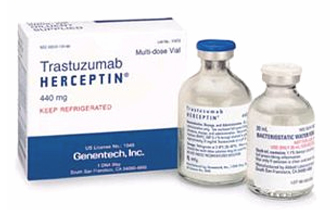
Targeted drugs destroy specific types of breast cancer. Examples include trastuzumab (Herceptin), lapatinib (Tykerb), and bevacizumab (Avastin). These drugs are all used for different purposes.

Treatments for breast and other cancers can have severe adverse effects.

The patient should discuss with a doctor the risks involved and ways to minimize the negative effects, when deciding on treatment.

Prevention and outlook
There is no sure way to prevent breast cancer, but some lifestyle decisions can significantly reduce the risk of breast and other types of cancer.

These include: 
  • avoiding excess alcohol consumption 
  • following a healthy diet with plenty of fresh fruit and vegetables 
  • getting enough exercise 
  • maintaining a healthy body mass index (BMI) 

Women should think carefully about their options for breast-feeding and the use of HRT following menopause, as these can affect the risk.

Preventive surgery is an option for women at high risk.

Outlook
With treatment, a woman who receives a diagnosis of stage 0 or stage 1 breast cancer has an almost almost 100 percent chance of surviving for at least 5 years.

If the diagnosis is made at stage 4, the chance of surviving another 5 years is around 22 percent.

Regular checks and screening can help detect symptoms early. Women should discuss their options with a doctor.


Breast Cancer and surgical options

Most women with breast cancer undergo some type of surgery to treat the primary tumor. The goal of surgery is to remove as much of the cancer cells as possible. Surgery may also be done for:
  1. Find out if the cancer cells have spread to the lymph nodes under the arm, 
  2. To restore the shape of the breast after a mastectomy, 
  3. Or to relieve symptoms in advanced cancer. 
Below are the most common types of breast cancer surgery.

Breast Conservation Surgery 
In this type of surgery, only part of the breast will be removed. The size of the part to be removed depends on the size and location of the tumor and other factors.

Lumpectomy: this surgery only removes the breast lump and some of the normal tissue around it. Radiation treatment is usually given after this type of surgery. If chemotherapy is also being used, radiation may be delayed until chemotherapy is finished. If there is cancer on the margins of the piece of tissue that was removed, the surgeon may need to come back and remove more tissue.

Partial (segmental) mastectomy or quadrantectomy: this surgery/surgery removes more of the breast tissue that is done in a lumpectomy. This is usually followed by radiation therapy. But radiation may be delayed if chemotherapy is also to be given.

Side effects of this surgery can include pain, swelling in the short term, the texture of the breasts is soft and hard because of the scar tissue formed as a result of the surgery.

The more parts of the breast that are removed, the more likely there is a change in the shape of the breast after that. If your breasts look very different after surgery, you may be able to have some type of breast reconstruction surgery above or make the breast on the other side smaller so that both breasts look the same. It is even possible during the first surgery. So it's best to discuss with your surgeon to get an idea of ​​the shape of your breasts after surgery and the options/options that are available to you.

Mastectomy 
Mastectomy involves removing all of the breast tissue, sometimes other nearby tissue is also removed.

Total or Simple Mastectomy: In this surgery the entire breast is removed, but does not include the lymph nodes under the arm or the muscle tissue under the breast. Sometimes both breasts are removed, especially if a mastectomy is performed to prevent cancer. If necessary, the patient can stay in the hospital and go home the next day.

For women planning to have reconstruction, a skin-sparing mastectomy may be performed. For this reason, most of the breast skin (apart from the nipple and areola) is left intact. This can also be done for a simple mastectomy. The amount of breast tissue removed is the same as for a simple mastectomy. Although this approach is not used over standard mastectomy, it is preferred because there is less scarring and the reconstructed breast will appear more natural.

Modified radical mastectomy: This surgery involves removing the entire breast as well as some of the lymph nodes under the arm. This is the most common operation for women with breast cancer to remove the entire breast.

Radical mastectomy: This is a major surgery in which the surgeon removes the entire breast, underarm (axillary) lymph nodes, and chest wall muscles under the breast. this operation used to be very common, but is rarely performed now that modified radical mastectomy has been shown to work just as well. But this surgery can still be done for large tumors that grow into the muscle under the breast.

Possible Side Effects 
In addition to postoperative pain and changes in the shape of the breast(s), possible side effects of mastectomy and breast conserving surgery, include: wound due to infection, blood formation in the wound, formation of clear fluid in the wound. If axillary lymph nodes are also removed, another possible side effect is swelling of the arms and chest (lymphedema).

Choosing between Lumpectomy and Mastectomy
Many women with early-stage cancer can choose between Breast-Conserving Surgery and Mastectomy. One advantage of a lumpectomy is that it will save the way the breast looks. The downside is that it can take weeks for radiation after surgery to be done. On the other hand, some women who have had a mastectomy still need radiation.

When choosing between a lumpectomy and a mastectomy, make sure you get all the facts. But the reality is that for most women with stage I or II breast cancer, a lumpectomy (plus radiation) can be as good as a mastectomy. There was no difference in the survival rates of women treated with the 2 methods. Lumpectomy is not an option for all women with breast cancer. Your doctor will tell you if there are reasons why a lumpectomy might not be recommended for you.

Other Breast Cancer Surgery 
Excision of lymph nodes in the axillary region: This surgery is performed to find out if the breast cancer has spread to the lymph nodes under the arm. Some nodes are removed and examined under a microscope. This test is done to determine the next type of cancer treatment that you need.

A possible side effect of this removal is swollen lymph nodes in the arm, called lymphedema. This occurs in about 3 out of 10 women who undergo the procedure. Sometimes the swelling only lasts for a few weeks and then subsides. Other times, the swelling lasts a long time. Ways to help prevent or reduce the effects of lymphedema are discussed in the section, "What happens after treatment for breast cancer?" If your hand is swollen, tense, or sore after this procedure, make sure you inform your paramedic right away.

Sentinel lymph node biopsy: a sentinel lymph node biopsy is a way to view the lymph nodes without having to remove them all. For this test, a radioactive substance and/or dye is injected near the tumor. It will be carried by the lymph system to the first (sentinel) nodule to receive lymph from the tumor. These nodules are most likely to contain cancer cells if the cancer has spread. These nodules (often 2 or 3 nodules) are then examined by a pathologist. If the sentinel nodule contains cancer, then the lymph node will then be removed. This type of biopsy requires very high expertise, so make sure it is done by an experienced team.

Reconstructive or breast implant surgery: After a mastectomy (or some breast-conserving surgeries), a woman may want to think about getting her breasts back in shape. This surgery is not meant to treat cancer. They are done to restore the way the breast looks. If you've had breast surgery and are thinking about having breast reconstruction, you should talk to a plastic surgeon before your surgery. .

You can get more detailed information about the different types of surgeries and their possible side effects in our document, Breast Reconstruction After Mastectomy. You may also find it helpful to talk to a woman who has the type of reconstruction you have in mind. Our reach for Recovery volunteers can help you with this. Contact us if you'd like to speak to one of the volunteers.

What to expect with Surgery? 
For many people, the thought of surgery can be frightening. But knowing what will happen before, during, and after can help reduce your fear.

Before surgery: A few days after the biopsy, you will know if you have cancer, but the extent of progress won't be known until after surgery. You will most likely meet with your surgeon a few days before your surgery to talk about what will happen. You will be asked to fill out a consent form giving the doctor permission to perform the operation. This is a good time to ask any questions you may have.

You may be asked to donate blood ahead of time, in case you need it during surgery. Your doctor will also ask you about any medications, vitamins or supplements you are taking. You may have to stop taking some vitamins/supplements a week or 2 weeks before your surgery.

You will also be met by a professional paramedic who will give you anesthesia (medicine to make you sleep and feel no pain) during your surgery. The type of anesthesia used depends on the type of surgery performed and your medical history.

Surgery: For your surgery, you may have the option of being treated as an outpatient or in a hospital. General anesthesia, usually given for a mastectomy or removal of lymph nodes, and most often used also for breast-conserving surgery. You also have to be given an IV to give medicines that may be needed during surgery. You will be connected to an electrocardiogram (ECG) and a machine to place blood pressure on your arm cuff, so your heart rhythm and blood pressure can be checked during surgery.

How long the surgery will take will depend on the type of surgery being performed. For example, a mastectomy with lymph node removal will take about 2-3 hours. After surgery, you will be taken to the recovery room, where you will stay until you are awake and your vital signs (blood pressure, pulse, and respiration) are stable.

After Surgery: How long you stay in the hospital depends on the type of surgery you had, your overall health, whether you have any other medical problems, how well you did during surgery, and how you feel after surgery. You and your doctor should decide how long you have to stay in the hospital - not your insurance company. However, it is important to check your insurance coverage before surgery.

As a guide, women having a mastectomy usually stay in the hospital for 1 or 2 nights and then go home. But some women may be placed in a rapid stay unit (23 hours) before going home.

Operations such as lumpectomy and sentinel lymph node biopsy are usually performed on an outpatient basis and do not require an overnight stay.

After surgery, you may have a bandage over the surgical site that is tightly wrapped around your chest. You may have one or more tubes (drains) from your breast or armpit area to remove fluid that has accumulated during the recovery process. The process is about 1 or 2 weeks. After the flow has reduced to 1 ounce per day, the tube is removed.

Most doctors want you to start moving your hand immediately after surgery so it doesn't get stiff. Many women who have had a lumpectomy or mastectomy are surprised by the minimal pain they feel in the breast area. But they are not happy with the strange feeling (numbness, pulling/pinch) in their armpit area.

Talk with your doctor about what you should do after surgery to take care of yourself. You should obtain written instructions that will tell you the following:
  1. How to treat and cover wounds 
  2. How to care for lines/tubes 
  3. How to know if you have an infection 
  4. When to call the doctor or nurse 
  5. When to start using the arm and how to exercise the arm to prevent stiffness 
  6. When will you start wearing bras again? 
  7. When and how to wear breast foam/support (called prosthesis) 
  8. What to eat and what not to eat 
  9. Medications needed (including pain medication and possibly antibiotics) 
  10. What activities can and cannot be done 
  11. How you feel about how you look (your boobs) 
  12. When to call your doctor for a follow-up appointment 
Most patients see their doctor about 7 to 14 days after surgery. Your doctor should explain the results of your pathology report and talk to you about whether you will need more treatment.

Post Mastectomy Pain 
Nerve pain after a mastectomy or lumpectomy is called post-mastectomy pain syndrome or PMPs. Signs of PMPs are chest wall pain and tingling under the arms. Pain may also be felt in the shoulder, scar, arm, or armpit. Other common complaints include numbness, stabbing/sharp pain, or unbearable itching.

It is important to talk to your doctor about the pain you are experiencing. PMPs can cause you not to use your arm as you should and over time you may not be able to use it normally.

PMPs are treatable. Medications that are usually used to treat pain may not work as well for nerve pain. But there are drugs and other treatments that work for this type of pain. Talk to your doctor to get the pain management you need.

Farmacy/Medical Drug